At first glance, buying cheaper hi-vis seems like a smart decision.
Lower upfront cost. Easy bulk ordering. Quick turnaround.
But a few months later, the same businesses often find themselves reordering, replacing, or dealing with issues they did not expect.
So the real question is not “How much does it cost today?”
It is “What will this cost over time?”
Let’s walk through what actually happens when price becomes the main decision factor.
The True Cost Starts After the First Wash
Cheap hi-vis often looks fine when it arrives.
Bright colour. Clean stitching. Reflective strips in place.
But after a few washes, things begin to change:
- Fluorescent fabric starts to fade
- Reflective tape loses intensity
- Material becomes thinner or rougher
- Stitching weakens
Once visibility drops, the garment may no longer meet EN ISO 20471 performance expectations.
This is not always obvious straight away, which is why fading is such a common issue. You can explore this further here:
Does Hi-Vis Fade Over Time and Why It Matters for Safety
What looked like a saving becomes an early replacement cycle.
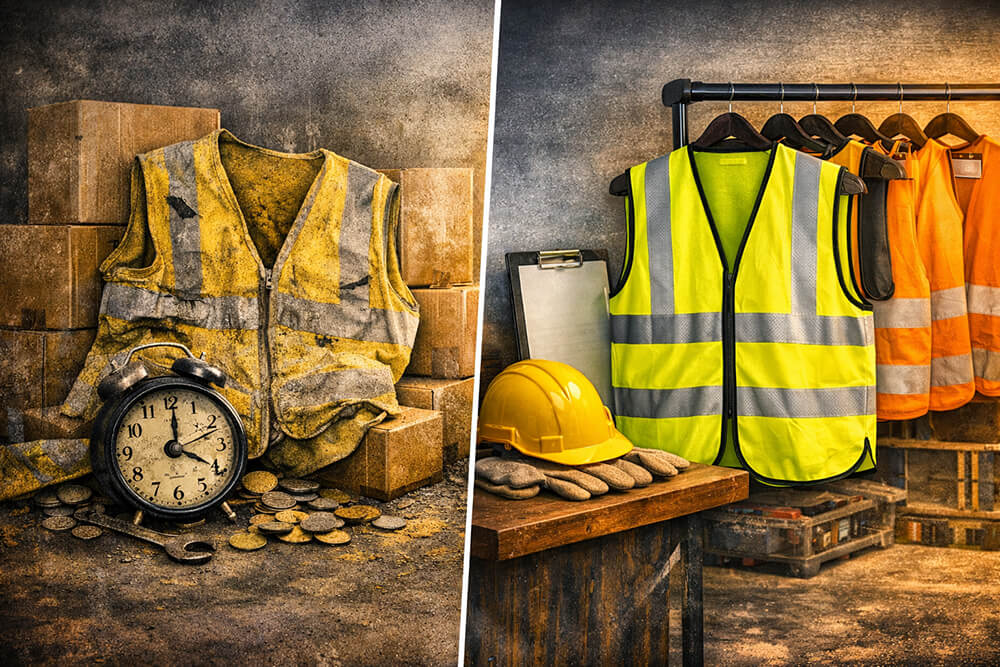
Replacement Cycles Add Up Quickly
Let’s compare two scenarios:
Lower-cost option:
- Needs replacing every 3–4 months
Higher-quality option
- Lasts 9–12 months
Even if the initial hi vis cost is lower, repeated purchasing increases total spend over a year.
Add in:
- Admin time for reordering
- Delivery costs
- Stock management
And the gap becomes even wider.
Compliance Risks Are Easy to Overlook
Not all low-cost hi-vis is fully compliant.
Some common issues include:
- Missing or unclear EN ISO 20471 certification
- Incorrect reflective tape placement
- Insufficient fluorescent material coverage
Under the Personal Protective Equipment at Work Regulations 1992 (as amended), employers must provide suitable PPE that remains effective.
If a garment fails to meet standards, it may not only increase risk but also expose businesses to compliance issues.
If you are unsure what to check before buying, this guide is worth reviewing:
What to Look for When Buying Hi-Vis Workwear Online
Comfort Impacts Real-World Costs
One of the most overlooked factors in hi-vis purchasing is comfort.
Cheap garments often use heavier, less breathable materials. Over time, this can lead to:
- Workers removing layers
- Zips left open
- PPE worn incorrectly
When hi-vis is not worn properly, its effectiveness drops.
Modern designs are moving toward lighter, more breathable fabrics because comfort supports consistent use. This shift is explored here:
Why Breathable Hi-Vis is Growing in Demand Across the UK
A cheaper garment that is not worn correctly creates hidden risks.
Damage Happens Faster Than Expected
In real working environments, hi-vis clothing faces:
- Abrasion from tools and equipment
- Exposure to dirt, oil, and chemicals
- Frequent washing cycles
Lower-quality materials tend to degrade faster under these conditions.
That leads to:
- Cracked reflective strips
- Faded panels
- Loss of shape
Once performance drops, the garment needs replacing, regardless of how new it looks.
Custom Work Clothing: Where Cheap Gets Expensive
Many businesses invest in custom work clothing or custom hi vis clothing with logos.
This is where cutting costs can backfire.
Low-cost garments may:
- Struggle with print durability
- Crack or peel after washing
- Require reprinting or replacement
In contrast, better-quality garments tend to hold branding for longer, reducing the need for repeat orders.
When customisation is involved, durability becomes even more important.
The Hidden Cost of Inconsistency
Frequent replacements create inconsistency across teams:
- Different shades of colour
- Worn vs new garments
- Inconsistent branding
This can affect:
- Professional appearance
- Team identity
- Public perception
While not always considered a “cost,” it can influence how a business is viewed by clients and the public.
A Smarter Way to Think About Hi-Vis Cost
Instead of focusing on the cheapest option, it helps to think in terms of value.
Ask:
- How long will this garment realistically last?
- Will it maintain compliance over time?
- Is it comfortable enough to be worn properly?
- Will branding remain intact?
- How often will we need to replace it?
When you look at the bigger picture, the lowest upfront price is rarely the lowest overall cost.
Final Thoughts
Cheap hi-vis often feels like a saving at the point of purchase. But over time, durability, compliance, and wearability all influence what you actually spend.
Investing in better-quality options can reduce replacement cycles, improve comfort, and support consistent safety across your workforce.
If you are reviewing your current hi vis cost strategy or exploring custom hi vis clothing and custom work clothing options that balance price with long-term value, it may be time to rethink your approach.
For guidance on cost-effective, compliant solutions tailored to your workforce, contact Brook Hi Vis.