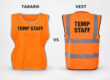
A hi-vis vest might have a company logo on the chest, a job title across the back or both. But where should each detail go to make it useful?
For businesses ordering personalised Hi Vis Vests, placement deserves as much attention as the information being printed.
The front and back serve different purposes. Understanding those differences can help businesses create clearer, more practical workwear without overcrowding the garment or interfering with its protective features.
Start With How People Will See the Vest
A customer speaking directly to an employee may notice the front of their vest. Someone approaching from behind may find a larger back label easier to recognise.
That distinction helps explain why front and back printing should not necessarily contain identical information.
The objective is to communicate useful details where people are most likely to notice them.
What Information Works Best on the Front?
Common choices include:
- Company logos
- Employee first names
- Department names
- Short job titles
For example, a maintenance employee might wear a small company logo on one side of the chest and a department label on the other.
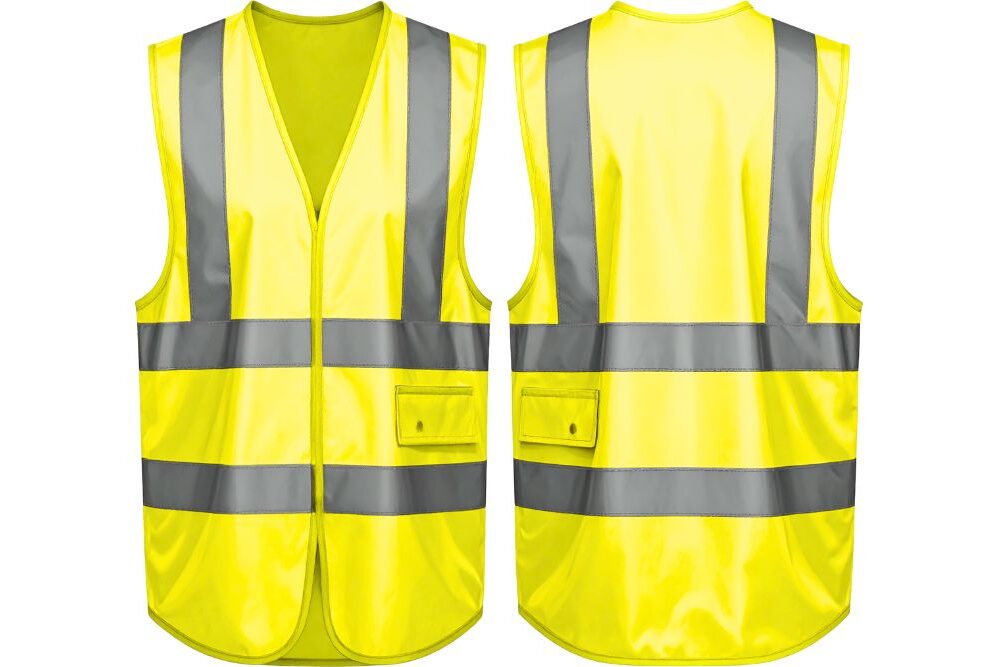
However, pockets, zips, seams and reflective tape can restrict available printing space.
Avoid squeezing several details into a small area. A simple, readable design will often be more practical.
Our article How to Choose the Right Logo Size for Custom Hi-Vis Clothing provides additional guidance on matching branding to garment dimensions.
What Should Go on the Back?
This can be useful for workplaces where people need to identify particular roles quickly.
For example:
| Workplace role | Possible back printing |
| Event steward | STEWARD |
| Site supervisor | SUPERVISOR |
| Warehouse employee | WAREHOUSE TEAM |
| Temporary visitor | VISITOR |
| First aider | FIRST AIDER |
These are practical examples, not legally required wording.
The important consideration is whether the information accurately reflects the wearer’s responsibilities.
A label should never imply that someone has received specialist training or authorisation when they have not.
Should the Same Information Appear on Both Sides?
Repeating a company logo on the front and back may be useful for branding, but it can also occupy space that would otherwise communicate a job role.
A more practical arrangement might be a small company logo on the chest and a clear role description on the back.
For workplaces with different departments, this can help distinguish employees without requiring lengthy printed messages.
The best combination depends on the working environment and how people interact.
What About Reflective Tape and Hi-Vis Standards?
High-visibility clothing used as PPE must remain suitable for the risks identified by the employer.
The Health and Safety Executive’s guidance on high-visibility clothing explains that garment suitability depends on workplace conditions, lighting, visibility requirements and the work being performed.
For garments certified to BS EN ISO 20471, printing must not compromise the fluorescent or retroreflective material required for the garment’s certified performance.
There is no universal UK rule stating that every logo must be a particular size or that printing must always appear on one specific side.
Our article Can You Personalise Hi-Vis Vests Without Affecting EN ISO 20471 Compliance? explores these considerations in more detail.
How Much Text Is Too Much?
Long company names, telephone numbers, slogans and multiple role descriptions can make printed information difficult to read.
Before finalising a design, ask whether someone could understand its main message during a normal workplace interaction.
A short label such as SUPERVISOR is generally easier to recognise than several lines explaining the person’s responsibilities.
Lettering should also contrast sufficiently with its background, without compromising the garment’s required protective properties.
Should Different Teams Have Different Printing Layouts?
For example, a business might place company logos in the same position on every vest while changing the back label according to the employee’s role.
This approach can be particularly useful for events, warehouses and workplaces involving contractors.
However, businesses should avoid changing role labels unnecessarily or creating confusing identification systems.
For additional context, see Hi-Vis Clothing for Event Staff and Stewards Explained.
What Should You Check Before Approving the Design?
Check the wording, spelling, print placement and how the design appears across different sizes.
Also confirm that the proposed decoration is suitable for the garment and does not affect its certified performance.
The HSE’s PPE selection guidance recommends choosing equipment appropriate for the worker and task, with supplier advice where necessary.
For larger purchases, What to Check Before Ordering Hi-Vis Workwear in Bulk offers further ordering considerations.
Conclusion
Smaller identification details often suit the front, while larger role labels may work better on the back. Neither approach should interfere with the garment’s protective purpose.
Planning a new order of personalised Hi Vis Vests? Get in touch Brook Hi Vis offers custom printing options for workplace clothing. Explore suitable vest styles and discuss practical front and back layouts before finalising your team’s design.