Temporary workers often arrive with different clothing sizes, unfamiliarity with the workplace and limited time to settle into their roles. Whether they are helping at an event, covering warehouse shifts or supporting a seasonal project, suitable workwear matters from day one.
When comparing Personalised Hi Vis Tabards vs Vests, the choice is not simply about appearance or cost.
Both can help identify temporary staff, but their fit, fastening, reusability and suitability for workplace hazards may differ.
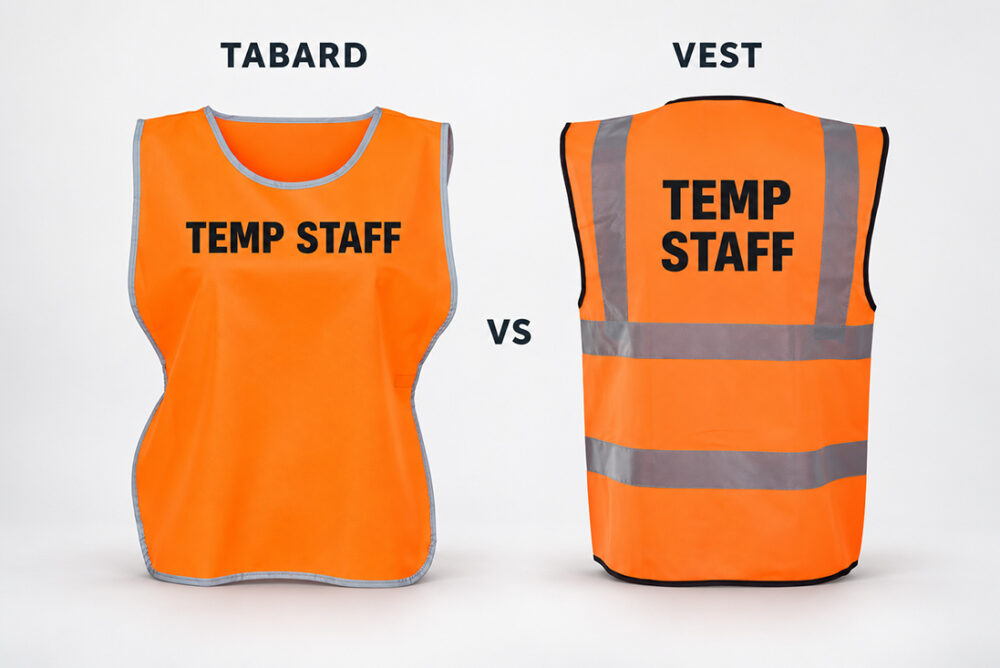
What's the Difference Between a Tabard and a Vest?
A hi-vis vest, sometimes called a waistcoat, usually has a more enclosed design with a front fastening.
However, manufacturers use these terms differently, so the actual garment specification matters more than its product name.
For temporary workers, the key questions are whether the garment fits properly, stays secure and allows employees to work comfortably.
Which Works Better for a One-Day Event?
Personalised hi vis tabards may be practical when workers need to put identification clothing over their existing outfits. Adjustable designs can sometimes accommodate different clothing layers.
They can also provide space for straightforward labels such as STAFF or EVENT SUPPORT.
However, a loose tabard may be unsuitable around equipment or machinery where fabric could become caught.
A fitted vest may offer a more secure alternative, depending on its design.
Our article Hi-Vis Clothing for Event Staff and Stewards Explained explores clothing considerations for different event responsibilities.
What About Temporary Warehouse Workers?
Workers may be walking near moving vehicles, handling stock or operating equipment.
A tabard with loose panels or unsecured straps could create snagging risks in some areas.
The Health and Safety Executive’s guidance on high-visibility clothing specifically highlights the potential problems associated with loose-fitting tabards near moving machinery.
For these roles, a properly fitted custom reflective safety vest may be more appropriate, provided it meets the required protective specification.
Our guide Choosing the Right Hi Vis for Your Job Role explains why workplace activities should influence garment selection.
Can Tabards and Vests Be Reused Between Workers?
Garments displaying general labels such as STAFF, VISITOR or CONTRACTOR may be easier to reassign than clothing printed with individual names.
However, reusable workwear must remain clean, serviceable and suitable for each wearer.
A garment that fits one employee correctly may not fit another.
Employers should also inspect reflective materials, seams and fastenings before reissuing clothing.
Sharing should never mean overlooking hygiene, fit or garment condition.
Are Tabards Cheaper Than Vests?
Prices depend on the fabric, construction, fastening system, certification, order quantity and personalisation requirements.
A basic tabard may initially cost less than a feature-rich vest, but that comparison does not necessarily reflect long-term value.
Businesses should consider how frequently garments will be reused and whether replacements are readily available.
For larger seasonal orders, What to Check Before Ordering Hi-Vis Workwear in Bulk provides useful purchasing considerations.
Do Both Meet UK Hi-Vis Safety Requirements?
Neither the term tabard nor vest guarantees that a garment meets a particular protective standard.
Where high-visibility PPE is required, employers must select clothing suitable for the workplace risks. Relevant certified products may conform to BS EN ISO 20471.
The HSE’s guidance on PPE responsibilities confirms that employers must provide suitable PPE free of charge when a risk assessment identifies the need.
These requirements also extend to qualifying workers under the amended PPE regulations.
For customised high visibility vests, printing must not compromise the fluorescent or retroreflective materials needed for certified performance.
Our article Can You Personalise Hi-Vis Vests Without Affecting EN ISO 20471 Compliance? discusses this consideration in greater detail.
Which is Easier for Temporary Staff to Wear?
A tabard with adjustable fastenings may be easy to put on over everyday clothing.
A front-fastening vest may offer a more familiar fit and allow workers to secure the garment without pulling it over their heads.
Neither design is automatically more comfortable.
Fit, fabric weight, ventilation and compatibility with other protective equipment should influence the decision.
For temporary staff working longer shifts, allowing employees to try different sizes can help identify practical problems before garments are issued.
A Practical Comparison for Employers
| Consideration | Tabards | Vests |
| Wearing over clothing | Often convenient | Generally convenient |
| Adjustment | Depends on side fastenings | Depends on sizing and design |
| Loose fabric | May need extra attention | Usually more enclosed |
| Role identification | Suitable printing areas may be available | Suitable printing areas may be available |
| Reuse | Possible after checks | Possible after checks |
| PPE suitability | Must be verified | Must be verified |
The table illustrates common design differences rather than guarantees about individual products.
Conclusion
Tabards may suit some short-term identification needs, while secure-fitting vests can be more practical in environments where loose clothing creates additional risks.
Preparing workwear for seasonal employees or temporary teams? Contact Brook Hi Vis offers personalised high-visibility clothing for different working environments. Explore suitable tabards and vests, compare garment specifications and choose options that support your team’s requirements.