How Does Hi-Vis Actually Work?
Most people wear high-visibility clothing because the rules say they should. But very few stop to ask why it works so well. The answer sits at the intersection of human vision, environmental contrast, and reaction time.
From construction sites to busy roadside work across the UK, hi-vis is not just a bright layer of fabric. It is a safety tool designed around how the human eye and brain detect movement and colour under pressure.

How the Human Eye Detects Danger
The human eye is naturally drawn to contrast, movement, and bright colours. Hi-vis clothing uses this biological response to make workers stand out faster in complex environments.
Key factors include:
- Peripheral vision sensitivity
- Colour brightness
- Shape recognition
- Speed of visual processing
When someone is seen earlier, others have more time to react. That reaction time is often the difference between a near-miss and a serious injury.
Why Fluorescent Colours Are So Effective
Fluorescent materials used in hi-vis do more than look bright. They absorb ultraviolet light and re-emit it as visible light, making the fabric appear to glow even in dull daylight.
This matters in the UK, where:
- Cloud cover is common
- Winter daylight is limited
- Weather reduces contrast
Fluorescent yellow, orange, and red are specifically approved under EN ISO 20471 because they perform best in these conditions.
The Role of Contrast in Busy Work Environments
Hi-vis works best when it contrasts sharply with its surroundings.
Examples:
- Yellow against tarmac or concrete
- Orange against roadside backgrounds
- Reflective strips against darkness
On worksites filled with machinery, vehicles, and movement, this contrast allows the brain to separate a person from background noise quickly.
This is one reason UK safety guidance stresses choosing the right colour for the environment, not just any bright garment.
Why Reflective Tape Matters After Dark
During low light or night work, fluorescent colour alone is not enough.
Reflective tape works by:
- Bouncing light back toward its source
- Making human outlines visible in headlights
- Improving distance recognition
Under UK PPE regulations, reflective material is critical for workers exposed to traffic or moving vehicles. This principle is covered in detail in Guide to Hi Vis Standards in the UK, which explains how garment classes are determined.
Reaction Time: The Hidden Safety Benefit
Q: Does hi-vis really give people more time to react?
Yes. Studies consistently show that higher visibility reduces detection time, which increases reaction time for drivers and machine operators.
Even a fraction of a second can:
- Prevent a reversing incident
- Reduce braking distance
- Allow evasive action
This is where hi-vis quietly saves lives without being noticed.
Why Shape and Fit Also Matter
The human brain recognises human silhouettes faster than abstract shapes. Hi-vis garments are designed to highlight:
- Arms
- Legs
- Torso movement
Poorly fitting clothing can reduce this effect. Oversized garments distort shape recognition, while tight clothing can limit movement. This is why choosing appropriate garments for specific roles is important, as explained in Choosing the Right Hi Vis for Your Job Role.
Does Personalisation Affect the Science?
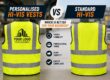
Many employers now use personalised hi vis work clothing or custom hi vis work clothing for identification and professionalism.
From a science perspective:
- Clear text can aid recognition
- Role labels improve response during emergencies
- Consistency helps teams identify each other quickly
However, personalisation must not reduce fluorescent surface area or interfere with reflective tape. Otherwise, it undermines the visual principles that make hi-vis effective.
Common Questions People Ask About Hi-Vis and Visibility
Is brighter always better?
Why does hi-vis seem less effective in heavy rain or fog?
Can hi-vis lose effectiveness over time?
Is hi-vis based on science or just regulation?
Why UK Law Treats Hi-Vis as Risk Control
UK health and safety law does not claim hi-vis prevents all accidents. Instead, it recognises hi-vis as a risk-reduction measure where visibility is a contributing hazard.
Employers are required to:
- Assess visibility risks
- Provide suitable PPE
- Maintain garments in a usable condition
This approach aligns with scientific evidence rather than relying on assumptions.
What the Science Really Shows
Hi-vis works because it supports how humans see, recognise danger, and respond under pressure. It improves detection, increases reaction time, and reduces confusion in complex environments. While it cannot remove every risk, it directly addresses one of the most common causes of serious workplace injuries: not being seen in time.
Conclusion
If you are reviewing visibility risks or upgrading compliant options, you can explore suitable solutions at Brook Hi Vis.