Walk through Leicester city centre at rush hour and you will quickly see the challenge.
Buses. Cyclists. Delivery vans. Pedestrians glued to phones. Flashing lights. Shop signage. Reflections from glass buildings.
In this environment, being “bright” is not enough.
So, what actually makes high-visibility clothing effective in busy urban areas? And how should Leicester employers think about compliance and real-world performance?
Let’s look at it from the ground up.
Urban Visibility Is Different from Rural Visibility
On a quiet roadside, a fluorescent jacket stands out clearly against natural surroundings.
In a city, the background is already loud.
Urban environments include:
- LED billboards and illuminated signs
- Vehicle headlights and brake lights
- Reflective shopfront glass
- Construction barriers and cones
- Street lighting of varying intensity
This creates visual competition. Hi-vis must compete with everything else demanding attention.
That is why UK law does not simply require “bright clothing.” Under the Personal Protective Equipment at Work Regulations 1992 (as amended), employers must provide suitable PPE based on a proper risk assessment. In urban areas, that assessment often demands a higher level of visibility performance.
It Is About Contrast, Not Just Colour
Fluorescent yellow and orange are designed to stand out in daylight. However, urban backgrounds often include similar tones, especially around construction sites.
Effectiveness depends on:
- Contrast with surroundings
- Reflective strip placement
- Garment coverage area
- Movement recognition
EN ISO 20471 sets clear requirements for minimum areas of fluorescent material and retroreflective tape. These requirements are there for a reason: drivers and equipment operators need to recognise a human shape instantly.
In city traffic, reaction time is everything.
Night-Time and Low-Light Risks in Cities
Urban work does not stop at sunset. Street repairs, rail maintenance, waste collection and emergency works often happen at night.
Here, reflective tape becomes critical.
Retroreflective strips bounce vehicle headlights directly back toward the source. Without properly positioned tape:
- Workers may blend into shadows
- Movement may be harder to detect
- Drivers may misjudge distance
If you are reviewing urban safety gear, it is worth understanding how material performance changes over time. You may find this helpful: Does Hi-Vis Fade Over Time and Why It Matters for Safety
Faded fluorescent fabric or damaged reflective tape can significantly reduce performance in city conditions.
Breathability Matters More Than You Think
Urban roles often involve constant movement. Road crews, delivery drivers, warehouse operatives and event staff are rarely standing still.
If hi-vis is uncomfortable, workers may:
- Remove outer layers
- Leave zips open
- Wear non-compliant substitutes
That instantly reduces protection.
Breathable materials are becoming more important across the UK because comfort affects compliance. When garments are wearable during long shifts, workers are more likely to keep them on correctly.
You can read more about this shift here: Why Breathable Hi-Vis is Growing in Demand Across the UK
Correct Classification for Urban Risk Levels
EN ISO 20471 divides garments into three classes:
- Class 1: Lowest level of visibility
- Class 2: Intermediate level
- Class 3: Highest level of visibility
Busy urban roads in Leicester often require Class 2 or Class 3 garments, depending on traffic speed and working distance from vehicles.
Employers must assess:
- Traffic volume
- Speed limits
- Proximity to moving vehicles
- Lighting conditions
- Duration of exposure
Choosing the wrong class can mean the garment is technically bright but legally insufficient for the risk level.
Personalisation and Urban Branding
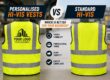
Many businesses choose custom made hi vis workwear or hi vis clothing personalised with company logos. Branding is important, especially in public-facing roles.
However, personalisation must not compromise compliance.
When ordering personalised hi vis workwear or custom hi vis clothing, ensure that:
- Reflective strips are not obstructed
- The minimum fluorescent area remains compliant
- Certification labels remain intact
Large back prints or oversized logos can unintentionally reduce the effective background area required under EN ISO 20471.
If you are placing a bulk order, reviewing these details beforehand can prevent costly mistakes. This article may help: What to Check Before Ordering Hi-Vis Workwear in Bulk
Maintenance in Polluted Urban Environments
City environments expose garments to:
- Dust and soot
- Oil splashes
- Road grime
- Frequent washing cycles
Over time, this affects reflectivity and fabric brightness.
Regular inspection and replacement schedules are part of an employer’s duty under UK PPE regulations. If reflective tape is cracked or the fabric has visibly faded, performance may no longer meet the standard originally certified.
The Human Factor
Hi-vis works best when it creates a recognisable human outline.
In fast-moving urban traffic, drivers are trained to recognise:
- Horizontal reflective bands
- Movement patterns
- Clear torso definition
The layout of reflective strips across shoulders and torso helps distinguish a person from a static object.
That instant recognition can be the difference between a near miss and a collision.
Final Thoughts
In busy urban areas like Leicester, effective hi-vis clothing is about visibility systems, not just fluorescent colour.
It combines:
- EN ISO 20471 compliance
- Proper garment classification
- Reflective placement
- Durability
- Breathability
- Careful personalisation
If you are reviewing your current safety gear or planning to order custom workwear UK solutions for urban teams, it is worth making sure your choices reflect real-world city risks.
For compliant custom hi vis clothing, hi vis clothing personalised, and expert guidance tailored to urban working environments, reach out Brook Hi Vis.