When people think about high-visibility clothing, the first thing that comes to mind is colour. Bright yellow. Fluorescent orange. Lime green.
But here’s the truth: colour alone does not make a worker visible.
If you operate in Leicester or anywhere in the UK, relying only on brightness can leave your team under protected. UK safety regulations, including EN ISO 20471, make it clear that visibility is about contrast, reflection, garment design, and correct usage not just fabric shade.
Let’s break it down properly.
1. Bright Colour Is Only the Starting Point
Fluorescent colours are designed to stand out in daylight. They absorb UV light and re-emit it, making them appear brighter than standard fabrics.
However, fluorescent fabric:
- Works best in daylight
- Becomes less effective at dusk
- Offers no reflective benefit at night
That is why the UK standard EN ISO 20471 requires both fluorescent background material and retroreflective tape for certified garments.
If you are unsure about classifications and performance requirements, this article explains them clearly: Hi Vis Colour Codes Explained (EN ISO 20471)
2. Reflective Tape Is What Makes the Difference at Night
In low-light conditions, reflective tape is what keeps workers visible.
Retroreflective strips bounce vehicle headlights directly back toward the source. This creates that unmistakable “glow” drivers see from a distance.
Without proper reflective placement:
- Workers blend into dark backgrounds
- Silhouettes become unclear
- Reaction times for drivers reduce
This is particularly important in roadside work across Leicester, construction sites, warehouses, and delivery environments.
The Health and Safety Executive (HSE) advises employers to assess environmental lighting conditions when selecting PPE. In many cases, colour alone is insufficient.
3. Placement and Garment Design Matter
Two workers can wear the same fluorescent colour yet one may still be harder to see.
Why?
Because visibility depends on:
- The amount of reflective material
- The spacing and positioning of tape
- Contrast panels
- Coverage area
For example, reflective bands around the torso and arms create a recognisable human outline. This helps drivers and machinery operators instantly identify movement.
That is why different risk levels require different classes under EN ISO 20471:
- Class 1: Minimum risk
- Class 2: Intermediate risk
- Class 3: High risk environments
Choosing the wrong class can leave workers under protected, even if the garment is bright.
4. Environment Changes Everything
Visibility is not just about the garment it is about the surroundings.
Consider:
- Foggy mornings in Leicester
- Rain reducing contrast
- Urban backgrounds with similar colours
- Indoor warehouse lighting
In poor weather or low-light environments, reflective performance becomes critical.
For a deeper look at how lighting impacts safety gear performance, you may find this useful:
Hi-Vis Safety in Low-Light and Night Conditions: What UK Workers Need to Know
5. Fit and Condition Affect Performance
Even the highest-rated garment loses effectiveness if:
- It is oversized and hangs loosely
- Reflective tape is cracked or worn
- Fabric is heavily soiled
- It is partially covered by other clothing
Regular inspection is recommended under UK PPE regulations.
Employers in Leicester must ensure PPE remains suitable and maintained. High-visibility clothing that has faded or deteriorated may no longer meet EN ISO 20471 requirements.
6. Personalisation Must Be Done Correctly
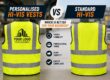
Many businesses choose custom made hi vis workwear or hi vis clothing personalised with logos and company branding.
Branding is perfectly acceptable but it must not compromise compliance.
When adding personalised hi vis elements:
- Reflective tape must not be removed
- Minimum background area must remain intact
- The garment classification must not be reduced
For companies ordering custom hi vis UK garments, it is important to confirm that printing or embroidery does not interfere with reflective zones.
Incorrect logo placement can unintentionally reduce visibility performance.
7. Season and Layering Can Impact Visibility
In winter months, many workers add jackets over base layers.
If that outer layer is not high-visibility compliant, the protective benefit disappears.
This is why seasonal planning matters. Cold-weather options must maintain certification standards.
You may also want to review: Top Hi Vis Gear for Winter 2025
So, What Should Leicester Businesses Be Asking?
Instead of asking, “Is it bright enough?” consider asking:
- Is this garment EN ISO 20471 certified?
- What class rating is required for this role?
- Will branding affect compliance?
- How does lighting impact this work environment?
- Is reflective tape positioned correctly?
Visibility is a system, not a colour choice.
The Bottom Line
True visibility combines fluorescent fabric, reflective materials, correct garment class, proper fit, environmental awareness, and compliant personalisation.
If you are reviewing your team’s safety wear in Leicester or across the UK, now is a good time to check whether brightness alone is doing the job.
For compliant custom made hi vis workwear, personalised hi vis, and custom hi vis UK solutions that maintain safety standards, contact Brook Hi Vis for guidance and compliant options tailored to your workforce needs.