Why Low-Light and Night Work Changes the Rules
Working early mornings, late evenings, or overnight comes with a different set of risks. Reduced daylight, glare from headlights, rain, fog, and fatigue all make it harder for drivers and machine operators to spot people in time. That is why Hi Vis Safety becomes even more important once light levels drop.
UK safety law recognises poor visibility as a serious hazard. When risk assessments identify low-light or night conditions, employers must provide suitable high-visibility clothing that helps workers stand out clearly.
What Makes Night-Time Visibility Different?
In low-light and night conditions, colour alone is not enough. Visibility relies heavily on reflective materials that return light back to its source, such as vehicle headlights.
Key challenges include:
- Reduced contrast between people and surroundings
- Headlight glare and shadows
- Weather scattering light
- Difficulty judging distance and speed
This is why garments that look bright during the day can perform very differently after dark.
How Reflective Materials Improve Hi-Vis Safety
Reflective strips are designed to bounce light directly back toward its source. At night, this helps drivers recognise a human shape sooner rather than spotting an object too late.
Well-designed hi-vis workwear:
- Outlines the torso, arms, and legs
- Creates a clear human silhouette
- Improves distance recognition
A custom reflective safety vest can still be effective at night, provided reflective tape placement is not altered or reduced.
Why Visibility Class Matters More After Dark
Hi-vis garments are classified based on how much fluorescent and reflective material they include.
Class 1
- Limited reflective coverage
- Often unsuitable for night or roadside work
Class 2
- Improved visibility
- Suitable for some low-light environments
Class 3
- Highest level of protection
- Full sleeve coverage with reflective tape
- Strongly recommended for night work and fast-moving traffic
This distinction is often misunderstood, which is why buyers sometimes assume all hi-vis performs the same in the dark. As explained in Is All Hi-Vis Workwear the Same? A Simple Breakdown, appearance alone can be misleading.
Low-Light Conditions Are Not Just “Night Work”
Q: When should low-light safety be considered?
Low-light risks are present during:
- Early morning starts
- Winter afternoons
- Heavy rain or fog
- Indoor yards with poor lighting
- Tunnels, underpasses, or covered sites
These conditions are common in the UK and should be considered during risk assessments.
The Role of Colour vs Reflection After Dark
During daylight, fluorescent colour plays a major role. At night, reflective performance becomes the priority.
Key points:
- Colour still helps at dusk and dawn
- Reflective tape dominates in darkness
- Contrast with surroundings affects detection
This is why Hi Vis Safety Light Conditions guidance focuses on both fabric colour and reflective placement rather than one or the other.
Does Custom Hi-Vis Affect Night-Time Safety?
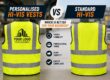
Many organisations use custom safety shirts or personalised garments for identification. From a safety perspective, this can be beneficial if done correctly.
Safe customisation should:
- Avoid covering reflective strips
- Maintain required fluorescent surface area
- Use materials that do not reduce reflectivity
Poorly planned customisation can weaken night-time visibility, even if the garment is technically compliant.
Common Mistakes Workers and Employers Make
Workers often report issues such as:
- Wearing daytime-only hi-vis at night
- Using faded or damaged reflective tape
- Relying on brightness instead of reflection
- Choosing comfort over visibility in poor lighting
These mistakes are more likely when buying without understanding how garments perform in real conditions, a topic covered in What to Look for When Buying Hi-Vis Workwear Online.
Does Hi-Vis Really Reduce Night-Time Injuries?
Q: Is there evidence hi-vis helps at night?
Yes. UK safety guidance and workplace data consistently show that improved visibility reduces vehicle-to-person collisions, especially in low-light and night settings.
As discussed in Do Hi-Vis Workwear Really Reduce Workplace Injuries? What the Evidence Says, hi-vis does not remove all risk, but it significantly reduces incidents linked to being unseen.
Practical Tips for Working Safely in the Dark
Workers and supervisors often find these steps helpful:
- Choose Class 3 garments for night or roadside work
- Inspect reflective tape regularly
- Replace clothing when reflectivity fades
- Combine hi-vis with site lighting and traffic controls
- Avoid layering that covers reflective areas
Hi-vis works best as part of a wider safety approach, not as a stand-alone measure.
What UK Law Expects in Low-Light Conditions
UK law requires employers to:
- Identify visibility risks through assessment
- Provide suitable PPE where needed
- Maintain hi-vis in effective condition
- Replace worn or damaged garments
Hi-vis is treated as a risk-control measure, especially important where vehicles, machinery, or public traffic are present after dark.
Conclusion
If you are reviewing options designed for low-light conditions, you can explore compliant solutions at Brook Hi Vis.