At first glance, hi-vis clothing looks pretty straightforward.
A bright vest. Reflective strips. Job done.
But if you walk into a Leicester warehouse and then visit a construction site five minutes later, you’ll quickly realise something: the risks aren’t the same.
Yet many businesses still issue identical hi-vis garments to everyone, regardless of the job they do.
The reality is that warehouse staff and site workers face very different hazards. Choosing role-specific hi-vis isn’t about preference. It’s about comfort, practicality, compliance, and keeping people safe.
Let’s take a closer look at why one type of hi-vis does not fit every workplace.
Different Workplaces, Different Risks
The first question employers should ask isn’t:
What hi-vis should we buy?
It should be:
What hazards are our workers exposed to?
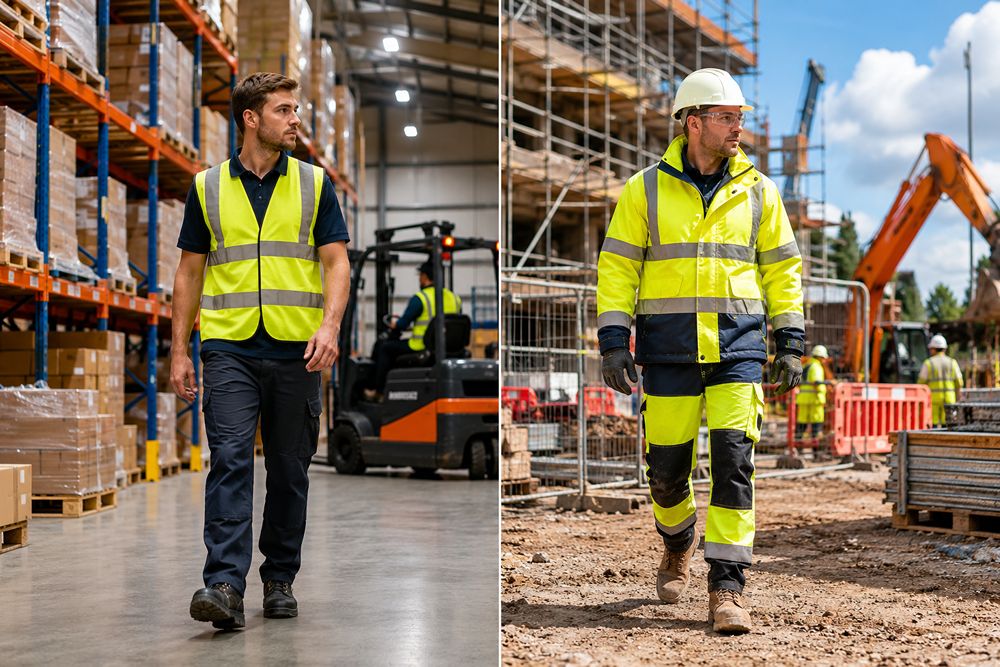
For example, warehouse employees may encounter:
- Forklift trucks
- Pallet movers
- Loading bays
- Indoor lighting variations
- Fast-paced picking environments
Meanwhile, site workers may face:
- Moving traffic
- Excavators and heavy machinery
- Uneven terrain
- Outdoor weather exposure
- Low-light working conditions
Under the PPE at Work Regulations, employers must provide suitable protective equipment based on identified risks.
Suitability is the key word.
Why Warehouse Workers Need Different Features
Warehouse teams are often indoors and constantly moving.
That changes what matters most.
What warehouse staff usually need:
- Lightweight hi-vis garments
- Greater flexibility and freedom of movement
- Breathable fabrics
- Sleeveless vests or lightweight tops
- Visibility suitable for forklift operations
- Comfortable options for long shifts
Heavy-duty jackets designed for outdoor construction work can quickly become uncomfortable indoors.
If workers overheat or feel restricted, they may stop wearing PPE correctly.
This links closely with:
How Worker Comfort Is Shaping Modern Hi-Vis Design
Comfort isn’t simply a bonus feature. It helps encourage proper use.
Why Site Workers Often Need More Protection
Construction and external work environments introduce additional hazards.
Site workers frequently require:
- Waterproof outerwear
- Higher visibility classifications
- Greater reflective coverage
- Protection from wind and rain
- Layering systems for changing weather
- More durable materials
Roadside and external projects may also involve reduced visibility during winter afternoons or early mornings.
This is where reflective performance becomes particularly important.
For further reading, this article provides useful insights:
Hi-Vis Safety in Low-Light and Night Conditions: What UK Workers Need to Know
Does EN ISO 20471 Mean Everyone Needs the Same Garment?
Not at all.
EN ISO 20471 sets standards for high-visibility clothing, but different garment classes suit different environments.
Generally:
Class 1
Class 2
Class 3
Employers should conduct risk assessments rather than assuming one class works across every department.
Indoor Lighting Creates Its Own Challenges
One common misconception is that indoor environments automatically require less consideration.
Warehouses can contain:
- Dark aisles
- Artificial lighting
- Shadowed storage areas
- High shelving
- Busy vehicle routes
Forklift operators rely heavily on quickly recognising movement.
Hi-vis remains important even without exposure to public roads.
This also challenges the myth that hi-vis is only necessary outdoors, as discussed in:
One Uniform for Everyone Can Create Problems
It may seem easier to purchase identical garments.
However, a “one-style-for-all” approach can lead to:
- Workers overheating
- Restricted movement
- Reduced comfort
- Lower PPE compliance
- Unnecessary replacement costs
The right garment supports the actual job being performed.
The wrong garment often ends up hanging on the back of a chair.
What About Personalised Hi-Vis?
Many Leicester businesses choose:
- personalised hi vis in Leicester
- custom hi vis gear in Leicester
Branding can help with:
- Team identification
- Professional appearance
- Visitor recognition
- Company consistency
However, logos and customisation must never interfere with reflective tape or reduce fluorescent surface areas required under EN ISO 20471.
Safety always comes first.
Questions Employers Should Ask Before Ordering
Before visiting a work clothes store in Leicester, ask yourself:
- Is this garment suitable for indoor or outdoor work?
- What vehicles or machinery operate nearby?
- Do workers require waterproof protection?
- How physically demanding is the role?
- Will employees wear it comfortably all shift?
- Does personalisation affect compliance?
These questions often prevent costly purchasing mistakes.
Final Thoughts
Hi-vis clothing may serve the same purpose across industries, but the way it performs depends heavily on the environment and the people wearing it.
Warehouse staff need flexibility, comfort, and visibility suited to indoor operations. Site workers often need enhanced protection against weather, traffic, and changing light conditions.
Choosing the right hi-vis isn’t about treating everyone equally. It’s about protecting people appropriately based on the work they actually do.
If you’re reviewing uniforms or exploring custom hi vis gear, personalised hi vis, or visiting a work clothes store in Leicester to upgrade your team’s PPE, taking a role-specific approach can improve both safety and wearer satisfaction.
For guidance on compliant, fit-for-purpose hi-vis solutions tailored to different working environments, contact Brook Hi Vis.