A ripped pocket. A broken zip. Loose stitching on the sleeve.
When minor damage happens to hi-vis clothing, many businesses ask the same question:
Can we repair it instead of replacing it?
It sounds like a practical way to save money, especially when managing large teams. But with high-visibility PPE, repairs are not always straightforward.
Under UK law, employers must provide PPE that remains suitable and effective. That includes ensuring repaired garments still meet visibility standards under EN ISO 20471.
So when is repair acceptable and when does replacement make more sense?
Let’s break it down.
Repairs That Are Usually Safe
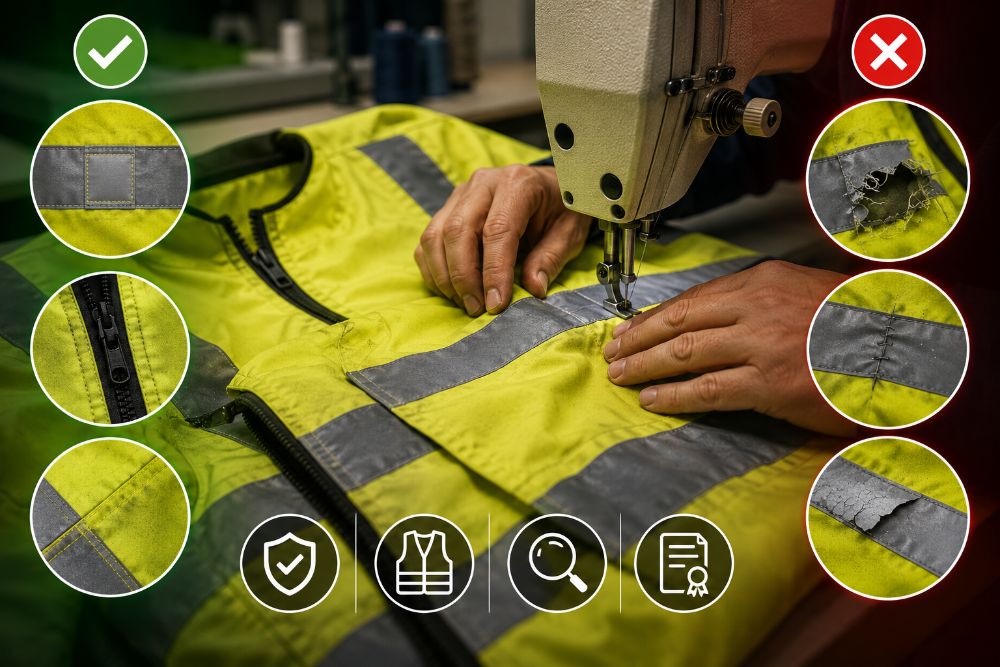
Some repairs may be possible without affecting compliance, provided they do not alter the visibility performance of the garment.
These often include:
- Replacing broken zips
- Fixing internal lining damage
- Repairing pockets
- Restitching seams away from reflective areas
- Replacing minor fasteners
These repairs are generally lower risk because they do not interfere with fluorescent fabric coverage or reflective tape positioning.
However, repairs should still be carried out professionally to avoid accidental damage.
Repairs That Can Create Compliance Problems
This is where businesses often get caught out.
Certain repairs may directly affect visibility performance.
Examples include:
- Sewing patches over fluorescent fabric
- Covering reflective tape
- Shortening garments
- Altering sleeves with reflective strips
- Replacing original reflective material with non-certified alternatives
Once the original garment design changes, it may no longer meet EN ISO 20471 requirements.
That creates potential compliance issues for employers.
The Reflective Tape Problem
Reflective strips are one of the biggest repair challenges.
If reflective tape becomes:
- Cracked
- Torn
- Peeled
- Detached
Many people assume they can simply sew on replacement strips.
The issue?
Not all reflective materials perform equally. Generic replacements may not meet the original certification standard.
Poorly aligned reflective tape may also reduce visibility from key angles.
This becomes especially important in challenging environments discussed here:
How Background Environments Affect Hi-Vis Effectiveness
Visibility depends on consistency.
Washing Damage Often Cannot Be Reversed
Sometimes garments appear repairable but the actual problem is deeper.
Repeated washing may cause:
- Fluorescent fading
- Reduced reflectivity
- Fabric weakening
These problems cannot usually be fixed through basic repairs.
Once visibility performance has dropped, replacement is often the safer option.
This connects closely with: How Washing Affects Hi-Vis Performance Over Time
When Replacement Is Usually the Better Option
In many situations, replacing the garment is simply safer and more cost-effective.
Replace hi-vis if:
- Fluorescent colours are heavily faded
- Reflective strips no longer work properly
- Fabric is torn in key visible areas
- The garment has undergone multiple repairs
- Certification labels are missing
- Structural integrity is compromised
Trying to repeatedly repair poor-quality garments often becomes more expensive over time.
This is why many businesses eventually face the issues discussed here:
Why Cheap Hi-Vis Can Cost More in the Long Run
What About Branded or Personalised Garments?
This is where things get more complicated.
Many companies invest in:
- hi vis clothing personalised
- custom hi vis clothing
- custom high vis workwear
- custom hi vis workwear
If branding gets damaged, repairs must avoid:
- Covering reflective strips
- Reducing fluorescent fabric area
- Creating uneven visibility zones
A damaged logo may be repairable. A damaged visibility panel may not be.
Custom garments still need to prioritise compliance.
Questions Employers Should Ask Before Repairing
Before repairing any hi-vis item, ask:
- Will this repair affect reflective performance?
- Will fluorescent coverage be reduced?
- Can compliance still be verified?
- Is repair cheaper than replacement long-term?
- Would you feel comfortable issuing this garment to your own team member in high-risk conditions?
That final question often gives the clearest answer.
A Simple Rule to Follow
If the repair affects visibility, replace it.
If the repair only affects minor functionality and leaves visibility untouched, repair may be reasonable.
That simple approach helps businesses avoid unnecessary risks.
Final Thoughts
Repairing hi-vis clothing can sometimes make sense, but only when safety performance remains fully intact.
Saving money should never come at the expense of visibility.
If you are reviewing damaged stock or exploring longer-lasting custom hi vis clothing solutions built for durability, choosing higher-quality garments often reduces repair headaches altogether.
For durable custom high vis workwear and compliant personalised options, contact Brook Hi Vis.