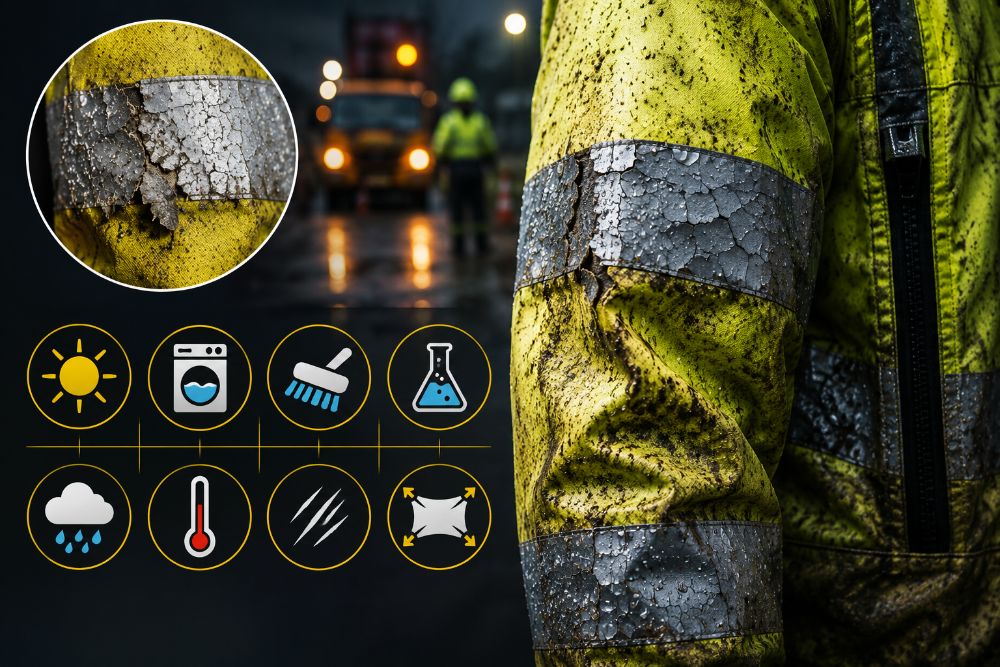
Most people notice fading fluorescent fabric first.
But reflective tape often fails earlier and many workers do not realise it until visibility has already dropped.
That silver strip across your jacket, vest, or trousers plays a major role in low-light safety. Under EN ISO 20471, reflective tape helps workers remain visible in poor weather, night shifts, roadside environments, and busy worksites.
The problem?
Reflective tape can quietly lose performance long before a garment looks “old.”
Let’s look at what damages it faster than most businesses expect.
1. Washing It Too Aggressively
This is one of the biggest causes of damage.
Repeated washing can slowly break down reflective surfaces, especially when garments are washed incorrectly.
Common mistakes include:
- Using high temperatures
- Over washing garments unnecessarily
- Using harsh detergents
- Using bleach
- Ignoring manufacturer washing instructions
Over time this can cause reflective strips to:
- Crack
- Peel
- Lose shine
- Separate from fabric
This often happens before businesses notice there is a problem.
This also connects closely with:
Does Hi-Vis Fade Over Time and Why It Matters for Safety
2. Tumble Drying on High Heat
Many workers want quick drying, especially during winter shifts.
But high heat from tumble dryers can weaken adhesive materials used in reflective tape construction.
This can lead to:
- Curling edges
- Warping
- Peeling
- Reduced reflectivity
Always check garment care labels before drying.
3. Dirt and Oil Build-Up
Reflective tape works by bouncing light back toward its source.
When dirt, grease, dust, or oil builds up, that reflective performance drops.
This is common in:
- Construction sites
- Warehouses
- Road maintenance
- Manufacturing environments
Even if the tape looks intact, heavy grime can reduce visibility significantly.
Regular cleaning matters but proper cleaning matters even more.
4. Constant Folding and Compression
This catches many businesses off guard.
Reflective tape can degrade when garments are constantly:
- Folded tightly
- Crushed in lockers
- Packed into tool bags
- Stored under heavy equipment
Repeated pressure creates cracking over time.
Poor storage habits shorten garment lifespan.
5. Sun Exposure
UV exposure does not just affect fluorescent fabric.
Long periods of direct sunlight can gradually weaken reflective materials, especially for workers regularly operating outdoors in Leicester during warmer months.
This can reduce both flexibility and reflectivity over time.
6. DIY Repairs
Many businesses attempt to repair hi vis clothing when reflective strips become damaged.
This often creates bigger problems.
Examples include:
- Sewing over reflective strips
- Using generic reflective patches
- Applying adhesive strips not certified for PPE use
Poor repairs may affect compliance with EN ISO 20471.
If reflective tape itself is damaged, replacement is often safer than temporary fixes.
7. Cheap Manufacturing Materials
Lower-cost garments often use lower-grade reflective tape.
These products may initially look fine but tend to fail much faster.
This often leads businesses toward frequent replacements.
And this article explains long-term cost issues as well:
Why Visibility Depends on More Than Just Colour
Choosing quality materials often reduces replacement cycles.
How to Check If Reflective Tape Is Failing
Watch for:
- Cracking
- Peeling edges
- Wrinkles
- Dull appearance
- Reduced brightness under headlights
- Separation from fabric
A simple visibility check using torchlight or vehicle headlights can quickly reveal issues.
What About Personalised Workwear?
Many businesses use:
- hi vis clothing personalised
- custom hi vis clothing
- custom high vis workwear
- custom hi vis workwear
Branding is fine but logos should never interfere with reflective areas.
Poor logo placement can create unnecessary stress on reflective strips during washing and wear.
Customisation should always maintain safety compliance.
How to Make Reflective Tape Last Longer
Simple habits help:
- Follow washing instructions
- Avoid harsh detergents
- Use lower drying temperatures
- Store garments properly
- Replace damaged garments early
- Buy higher-quality products from the start
These small steps can significantly extend garment life.
You can learn more here: Guide to Hi Vis Standards in the UK
Final Thoughts
Reflective tape often fails quietly.
By the time obvious damage appears, visibility may already be reduced.
Understanding what causes premature wear helps businesses protect workers, reduce replacement costs, and maintain compliance.
If you are reviewing damaged uniforms or looking for durable custom hi vis workwear built for long-term performance, choosing better-quality garments makes a major difference.
For durable custom high vis workwear and personalised options designed for demanding environments, contact Brook Hi Vis.