Most workers know hi-vis clothing will not last forever.
But here’s where confusion starts.
Some businesses replace garments too early and waste money. Others keep worn-out hi-vis in circulation for far too long, creating safety risks without realising it.
Under UK law, employers must provide suitable PPE that remains effective. That responsibility falls under the Personal Protective Equipment at Work Regulations 1992 (as amended).
So how do you know when hi-vis has reached the point where it should be removed completely?
Here are the warning signs employers and workers should never ignore.
1. The Fluorescent Colour Looks Dull or Faded
This is usually the first visible sign.
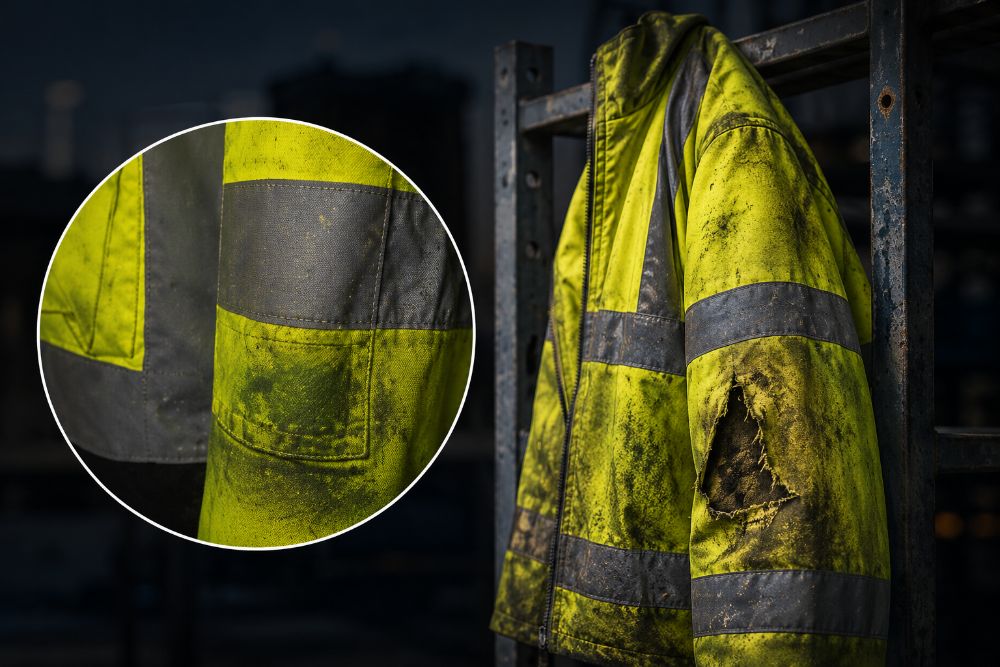
Fluorescent fabric is designed to stand out in daylight by reflecting UV light. Over time, repeated washing, sunlight exposure, dirt, and general wear can reduce that brightness.
If your hi-vis jacket now looks:
- Washed out
- Patchy
- Less vibrant than newer garments
- Difficult to notice in daylight
…it may no longer provide the visibility it was designed for.
This issue often develops gradually, which is why many teams miss it.
This is also connected to proper garment maintenance, which we covered in:
How Washing Affects Hi-Vis Performance Over Time
2. Reflective Tape Is Cracking, Peeling, or Losing Shine
Reflective strips are critical for low-light visibility.
If reflective tape becomes:
- Cracked
- Peeling at the edges
- Wrinkled
- Less reflective when exposed to light
…it should be taken seriously.
Drivers, machine operators, and site workers rely on that reflectivity to spot people quickly.
Damaged reflective strips can reduce visibility at night or during early morning shifts.
3. The Garment Has Tears, Holes, or Structural Damage
Even if the colour still looks bright, physical damage can make a garment unsuitable.
Watch for:
- Torn sleeves
- Broken zips
- Missing fasteners
- Large holes
- Fraying seams
Damaged garments may expose workers to additional hazards and may not meet workplace PPE standards.
4. It No Longer Fits Properly
This is often overlooked.
If hi-vis becomes:
- Too loose
- Too tight
- Stretched out
- Restricted after repeated washing
…it may affect both comfort and visibility.
Poor fit can cause reflective strips to sit in the wrong position or make workers less likely to wear the garment correctly.
You can explore this further here:
What Makes Hi-Vis Workwear Suitable for Daily Use
5. Certification Labels Are Missing or Unreadable
Many employers forget to check this.
EN ISO 20471 garments typically include labels showing:
- Certification details
- Washing instructions
- Product standards
If labels are completely unreadable or missing, it becomes harder to verify compliance.
This can create issues during audits or workplace inspections.
6. The Garment Has Been Modified Incorrectly
Many businesses invest in:
- hi vis clothing personalised
- custom hi vis clothing
- custom high vis workwear
Branding is fine when done correctly.
But if logos, patches, or alterations:
- Cover reflective strips
- Reduce fluorescent surface area
- Change garment structure
…the item may no longer remain compliant.
This is especially important when ordering custom hi vis workwear for larger teams.
7. It Fails a Simple Visibility Check
Here’s a quick practical test.
Compare older garments against newer ones under:
- Daylight
- Low-light conditions
- Vehicle headlights
If the older garment clearly performs worse, it may be time to remove it from use.
This practical comparison helps businesses spot issues before accidents happen.
For more guidance on ageing garments, this article may help:
Is Old Hi-Vis Still Legal to Wear on UK Worksites?
Should You Replace Everything on a Set Schedule?
Not necessarily.
Replacement depends on:
- Frequency of use
- Washing frequency
- Exposure to harsh environments
- Weather conditions
- Type of work being performed
A warehouse vest worn occasionally may last much longer than roadside PPE worn daily in harsh conditions.
Regular inspections are usually more effective than replacing everything on a fixed calendar date.
A Quick Checklist for Employers
Remove hi-vis from use if:
- The colour has faded significantly
- Reflective strips are damaged
- The garment has tears or structural issues
- Fit is compromised
- Labels are missing
- Customisation affects compliance
If you answer yes to any of these, replacement should be considered.
Final Thoughts
Hi-vis clothing is designed to protect workers, but only when it performs properly.
Keeping worn-out garments in circulation can create risks that are easy to avoid.
If you are reviewing older stock, replacing damaged uniforms, or exploring custom hi vis clothing options for your team, now is a good time to assess whether your current workwear is still doing its job.
For compliant custom high vis workwear and personalised solutions built for long-term use, contact Brook Hi Vis.