When it comes to hi-vis workwear, many people assume that its primary purpose is just to make the wearer stand out. And yes, the more visible, the safer. However, there is more to the equation than just choosing bright colours or reflective strips.
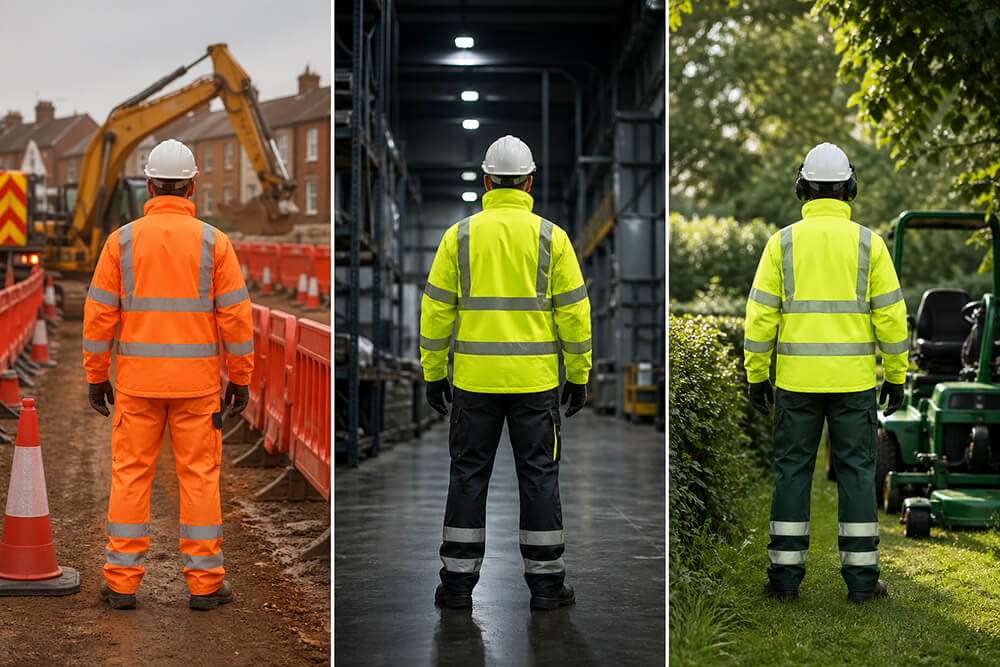
Background environments, such as the surroundings where workers are situated, have a significant impact on how well hi-vis clothing performs. Simply put, a garment that works well in one environment might not be as effective in another.
Let’s take a closer look at how different backgrounds affect hi-vis effectiveness, and what businesses need to consider to ensure the safety of their workers.
The Environment Makes All the Difference
The core purpose of hi vis clothing personalised is to make workers more visible, and this is usually achieved with fluorescent materials and reflective tapes. However, different environments create different challenges.
Here are some common factors that influence hi-vis performance:
1. Lighting Conditions
One of the most significant factors affecting hi-vis effectiveness is lighting.
- Daylight: In bright, natural light, fluorescent colours (like yellow and orange) are highly visible because they absorb UV light and reflect it, making them appear brighter than their surroundings.
- Low-light: In environments with dim or artificial lighting, the fluorescent material becomes much less effective. Reflective tapes, however, become more important in these conditions, as they reflect light back toward the source.
This is why it is essential to consider both the background and the lighting of a particular working environment when issuing hi-vis workwear.
You can learn more about how lighting impacts visibility in urban environments here:
What Makes Hi-Vis Effective in Busy Urban Areas
2. Urban vs. Rural Backgrounds
The type of background workers are operating in also plays a role.
- Urban environments: Streets filled with traffic, signs, and bright lights may create a cluttered background. Here, fluorescent material alone may not be sufficient. Hi-vis clothing needs reflective tape that works well in high-traffic areas with varying light conditions.
- Rural environments: On country roads or open fields, the lack of surrounding visual noise makes fluorescent colours more effective. However, workers in rural settings are often exposed to long stretches of road where being spotted early by drivers is critical. In these cases, hi-vis wearers need to be clearly visible from a distance.
The Importance of Proper Placement and Classifications
A common misconception is that any custom hi vis clothing is sufficient for all conditions. But, the visibility of the wearer depends not only on the fabric but also on the placement of reflective strips and the class of the garment.
- Class 1: Designed for low-risk environments (e.g., parking lots or warehouses). These garments offer basic visibility and are often not enough for road workers or others exposed to higher risks.
- Class 2 and 3: Suitable for environments where workers are exposed to moving vehicles or machinery, providing more reflective tape and fluorescent fabric coverage. These are necessary in urban areas, high-speed roads, or night-time conditions.
If a garment does not have the right classification or if the reflective tape is not in the right position, it could fail to provide adequate visibility, especially in more complex environments.
Weather Conditions: Another Factor to Consider
Weather can change the dynamics of how visible a worker is in their environment.
- Rain and Fog: These can drastically reduce visibility. Reflective tapes are even more crucial in such conditions as they help with recognition from a distance. However, cheaper reflective materials can deteriorate when exposed to water and moisture, which makes it essential to ensure that hi-vis clothing is designed for all weather conditions.
- Sunlight and Glare: Excessive sunlight can lead to glare, which may cause drivers to miss a worker on the side of the road. Proper reflective strips help here too, as they bounce the light back toward the source.
A worker wearing personalised hi vis workwear designed for various weather conditions will be able to remain visible even in adverse conditions.
The Role of Custom Workwear UK
Customisation is essential to creating a unified, professional appearance for a team. However, this should never come at the expense of functionality.
For example, when branding is added to hi-vis clothing, the placement is critical. Logos or large prints must not obscure reflective tape or reduce the required fluorescent area, as this can limit the garment’s effectiveness in busy or dimly lit environments.
Custom workwear UK solutions should balance both safety and branding. Be sure that your design doesn’t interfere with the garment’s functionality. This is especially important for workers operating in busy environments like construction sites or urban streets where visibility needs to be maintained at all times.
Key Considerations for Employers
Before issuing hi-vis PPE to your workers, take these factors into account:
- Background and Environment: Assess whether the work will be done in bright daylight, low-light conditions, or areas with lots of distractions (e.g., urban streets).
- Reflective vs. Fluorescent: Ensure the right balance of reflective tape and fluorescent material for the conditions workers will face.
- Garment Class and Fit: Ensure the right classification (Class 2 or Class 3) and that the fit is comfortable enough for workers to wear it consistently.
- Customisation and Compliance: When adding logos or designs, ensure that the garment still complies with visibility standards.
Final Thoughts
Hi-vis clothing is essential to worker safety, but its effectiveness is not just about picking the brightest colour. Environmental factors such as lighting, background, and weather conditions all play a significant role in how well hi-vis garments perform.
Employers need to consider these factors when issuing custom hi vis clothing or personalised hi vis workwear to ensure that workers are visible and safe at all times.
For more information on creating compliant, high-quality workwear solutions, get in touch with Brook Hi Vis.